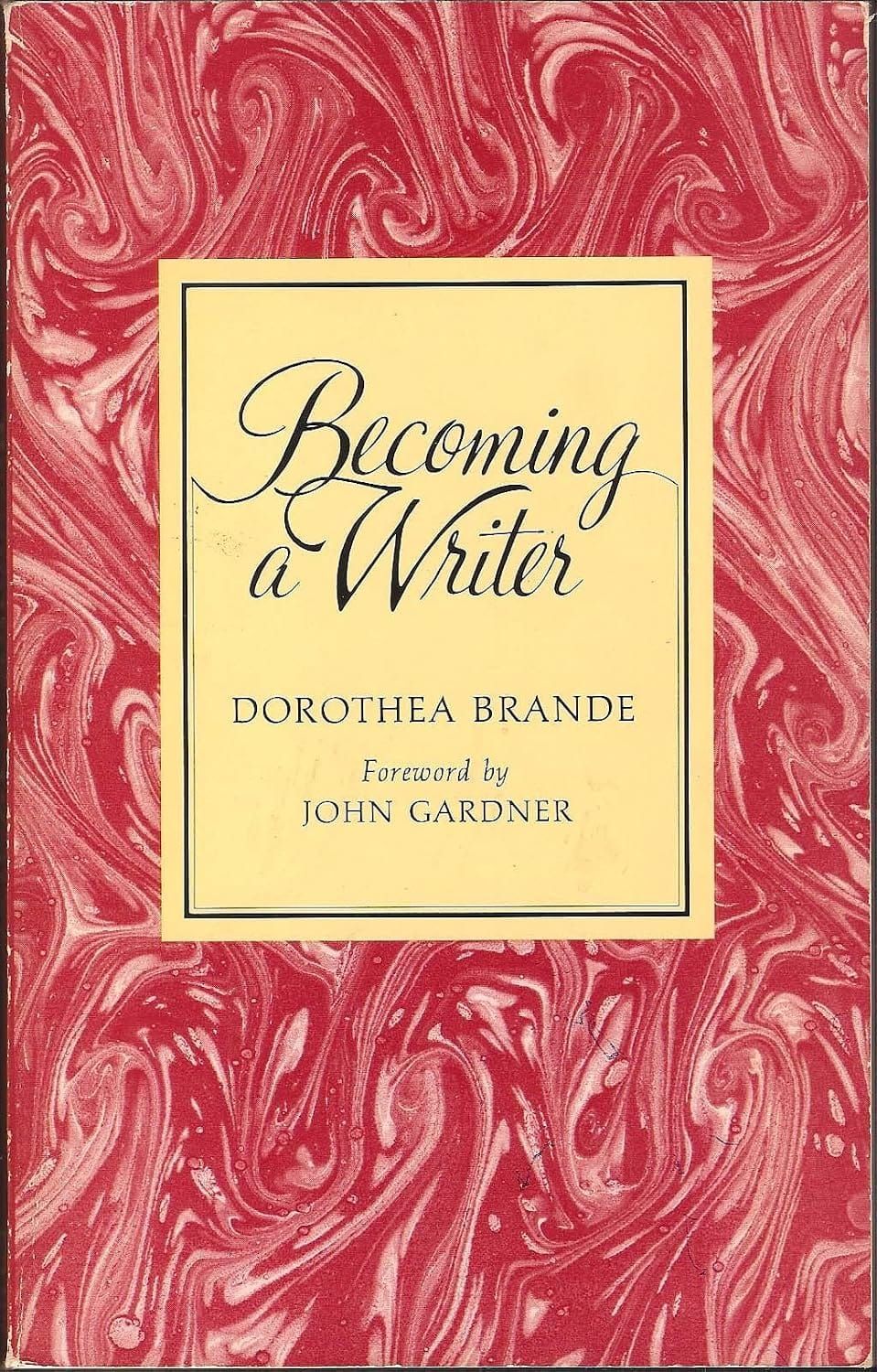
Becoming a Writer - Dorthea Brande
I have encountered few books that address the challenges of becoming a person who writes as thoroughly and with such compassion as Brande's 1930's text for early career writers, but I don't recommend buying it.
Tone - Old fashioned and modern in concert. Relaxed, supportive, and authoritative.
What - Advice not on how to write, but how to be a writer, aimed especially at beginning writers
Who - For people starting out in writing, or who are facing blocks, uncertainty, or inconsistency in their writing
Read it When - You want to build a writing habit, you are starting on your writing journey
% on Topic - high
One of the best parts of doing these book reviews is discovering where your favorite writers got their writing instruction from, and that there really isn't anything new under the sun. Brande's book was written in the 1930's and yet the advice echoes all of the things I am hearing from the prominent scholars of habit formation today. I have encountered few books that address the challenges of becoming a person who writes as thoroughly and with such compassion as Brande's 1930's text for early career writers.
One of the worst parts of doing these book reviews is looking into people's histories and discovering just how many dammed fascists were, and are, in the writing field. Brande's work does not address her politics, in fact if anything I would have said she was more on the spiritualism side than anything else (though that maybe should have been a tip-off given the time period). However looking up her biography as I typically do for these reviews, I discover that a third of her (admittedly short) wikipedia bio is given over to her marriage to Seward Collins, a prominent proponent of American fascism. Since they married in 1936 while Brande was working as an associate editor for his pro-fascist newspaper, I feel like I must put Brande in that camp as well. Therefore, I'll be a bit more thorough in my description of her recommendations, and if you are a subscriber I'm including the entirety of my notes below this review.
Brande positions this book as containing the things you need to know to get yourself writing, before you need to learn about technique. Many of the techniques in this book will feel strangely modern, despite the language of nearly 100 years ago. She suggests that you begin by finding the activities and books that make you want to write, and that they may not be the kinds of books that you "enjoy", only that they spark your writing. She suggests the same with people: find the people who inspire your writing and hang out with them. They may not be "acceptable company", but they will keep you working. Her advice on habit building closely aligns with the reading on habit formation by modern researchers, especially that of BJ Fogg's Tiny Habits. Her suggestion to surround yourself with people who make you want to write closely aligns with Angela Duckworth's new book Situated.
Brande also introduces a form of morning pages five decades before Julia Cameron wrote the Artist's way. In fact, Brande's Becoming a Writer is listed in the bibliography of The Artists way, though it is mentioned nowhere else in the book. Brande's method is almost point for point the same as Cameron's. Rise early in the morning, write as soon as you can, in bed if you need to, no reading first, no re-reading, just straight to writing. Write anything that comes to mind, write as long as you have free time, or until you have written yourself out.
As a follow up to morning writing, Brande recommends setting writing "appointments" for yourself during the day. 15 or 20 minutes where you can fit it into your day. These should be planned in advance, the day before or the morning of. You MUST write at that point of the day. No excuses. You will find a lot of resistance, but keep the appointment with yourself. She calls it a "debt of honor" with yourself. She suggests that you vary the time throughout the day, but importantly you must always write at the time that you set for yourself, "at that very moment." It does not matter what you write, you are training your subconscious to perform on demand.
The latter part of the book is advice on developing your own voice, including how to do a sort of master study, as well as some meditation techniques for creativity. It also includes the clearest articulation of a thing I think most writers feel instinctually: Story breakthroughs come while doing tasks that combine rhythm, monotony, and silence. She says that "if you want to stimulate yourself to write, amuse yourself in wordless ways."
Overall this was a useful book for me to read, and honestly I would heartily recommend it for new writers if it wasn't for the fascist connection. Given that, I would recommend you get this book from the library, or secondhand. There are dozens of copies available. And again, my notes on the entire text will be available for subscribers below.
Becoming a Writer Reading Notes
Hi readers! This is an experiment in making my complete reading notes available to you. If this is helpful I will try to do it for more books. Let me know in the comments if this was helpful? Best, ~EM
Dorthea Brande's Becoming a Writer aims to teach not what to write or how, but how to be a person who writes. Notes that most beginning writers struggle with the actual facts of being a writer the most.
- Points out four "difficulties" of beginning writers and addresses them one by one.
- Difficulty writing at all
- The "one book" author who is unable to repeat their first success
- The "occasional" writer - who suffers from "silences" between bursts of activity
- The "uneven" writer - who has an inability to carry a story to its conclusion, who who produces one good thing among several boring works
- Writers have two sides of themselves - two parts of their personality that need to work together but are often at odds.
- the "adult" side which is discerning, temperate, just (judgmental)
- the "childlike" side which is emotional and intuitive and creative (flighty, nervous, distractable)
- recommends letting (or tasking) the adult side with protecting the creative side.
- The Slough of Despond - all writers go through an early period of despair when the difference between what they are writing and what they are reading becomes acute. Many new writers are lost at this point.
- connect to [Ira Glass quote] about beginners and taste
- Both sides of a writer can work in harmony "But I is possible to train both sides of the character to work in harmony, and the first step in that education is to consider that you must teach yourself not as though you were one person but two." pp.44
- Keep your own council about your writing, especially early in your career, not because you don't need advice, but because the action of speaking to others may satisfy the itch of storytelling. Also, exposing yourself to harsh criticism early on can kill your desire to write.
- Don't let your inner artist read rejections, let the "adult" side deal with those
- find the activities and books that make you want to write, they may not be the kinds of books that you "enjoy", only that they spark your writing.
- Same with people, find the people who inspire your writing and hang out with them. They may not be acceptable company, but they will keep you working.
First exercise
- When you leave a room, become the object of your own attention, what do the look like standing there? How do you walk? How would someone else describe you? What could they tell about you just by looking? Not a writing exercise, just to ponder at different times.
- Describe an eveyday action, she suggests combing your hair, step by step in as much detail as you possibly can, in your mind without actually writing. Do this for several tasks.
Habits
- old habits are "strong" & "jealous" - I like this description of them.
- It is not necessary or desirable the brace your every nerve & muscle to bring about change in your life.
- Surprisingly modern advice on habit formation.
- [grit] and [situations] from [happiness lab] podcast.
- "Hitch your unconscious to your writing arm" pp.69
Second Exercise (Morning Pages and Appointments)
- rise half an hour early, write as soon as you can, in bed if you need to, no reading first, no re-reading, just straight to writing. Write anything that comes to mind, write as long as you have free time, or until you have written yourself out.
- When you have spent several mornings you'll find that you tend to write to a certain length. Once you have found that, try to write a few sentences more than your natural length each day until you've doubled your length. You'll find a "second wind"
- don't read your work at this stage. Just write.
- amazing how similar these directions are to morning pages, but introduced in the 1930's (and presumably earlier since she was teaching writing before that point)
Third Exercise
- once you have morning pages down, start making small appointments with yourself to write. 15 or 20 minutes where you can fit it into your day. These should be planned in advance, the day before or the morning of. You MUST write at that point of the day. No excuses. You will find a lot of [[resistance]], but keep the appointment with yourself. She calls it a "debt of honor" p77.
- Vary the time throughout the day, but importantly you must always write at the time that you set for yourself, "at that very moment." Does not matter what you write, you are training your subconcious to perform on demand.
- "If you fail repeatedly at this exercise, give up writing. Your resistance is actually greater than your desire to write and you may as well find some other outlet for your energy early as late" p79
- when you have done these two tasks for a while, stop and read your work, critically, aiming to identify your unique strengths and weaknesses as a writer, and which subjects inspire you.
- When you have identified your weaknesses, through frank critical study of your own writing, assign yourself to study works which do those things well that you lack.
- Be as specific as you can in your self criticism
Originality
- take an honest inventory of your life and make changes necessary for long term, stable output. Be honest & make the changes needed. Closely analyze your life "rarely but well"
- Reading as a writer: Read twice, after the first time through, make a summary judgement of the work. What worked well? What didn't work. The second time read for detail. Ask questions about the work you are interested in such as "how does the author make that dialogue so natural?" [Master study]
- do not imitate an author's philosophies, ideas or dramatic notions, rather go to the source (or as near as you are able) of those ideas and study those works for inspiration. That way you internalize the ideas themselves and make them your own, and not an imitation of the author's expression of them
- DO imitate an author's "technical excellences" by tearing apart passages word by word, even to counting words, to figure out what makes them work. You may write an imitation passage, closely imitating the author's words, even noun for noun, adverb for adverb, to figure out how the achieve their effect.
- Learn to observe the world with a child's eyes, because a small storehouse of imagery is the cause of "repetitious images" in your work. Points out several recurring images in the works of her contemporaries.
- practice "innocence of eye" for half hour periods, looking at the world as if it was totally new and every thing was of interest to you. There's a connection to [meditation] here and later in the text.
- You can also practice noticing and describing everything around you for 15 minutes with as much detail as possible.
- Persistantly persue specific, definiate words and phrases
- doing these tasks persistantly will provide you with an inexhaustable storehouse of imagery to draw upon.
- Editiors are looking for originality, so direct imitation, especially of popular or successful authors, is never the right path.
- You must be willing to say precisely what you think of any given situation or character. To tell the story as it can only appear to you.
- You must be willing to take a stance now, from your honest point of view and know that you may change your view later, but your pov now is vital and important.
- "if you want to stimulate yourself to write, amuse yourself in wordless ways."
- Style is contagious - confine your reading to things very far from your own style while writing
- turn to your morning pages to realize your style.
Practice story
- thing about your story for a while before writing it.
- then make an appointment with yourself to write it.
- Finish the piece, no matter how long it takes.
- put the story away until you can be objective about it (without reading it) it may take days or weeks.
- Story breakthroughs come while doing tasks that combine rhythm, monotony, and silence
- But the same effect can be achieved through what she calls "holding your mind still" she is basically describing several types of meditation. Including meditating while holding a character or story element as the "object" of the meditation
- also gives instructions for an "artistic coma" basically a mediation exercise to induce writing. Sounds effective, but takes several hours, not including writing time.