Don't Leave Gaps in Your Roller Coaster
An ode to Roller Coaster Tycoon and building manuscripts that don't fly off the tracks.
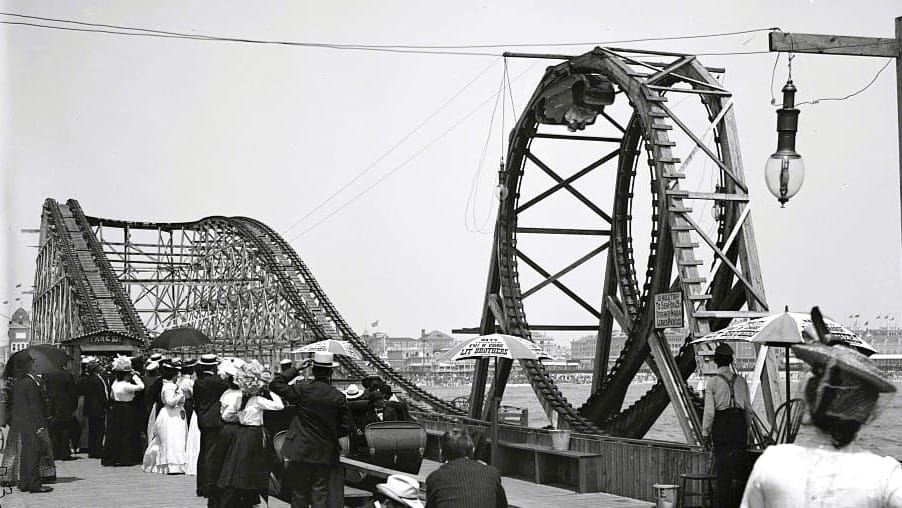
I think we are all familiar with the big arc image of plot, a slow build of action towards the climax, a rush of . If you are like me you probably were shown an image like this one which depicts the story as a roller coaster:
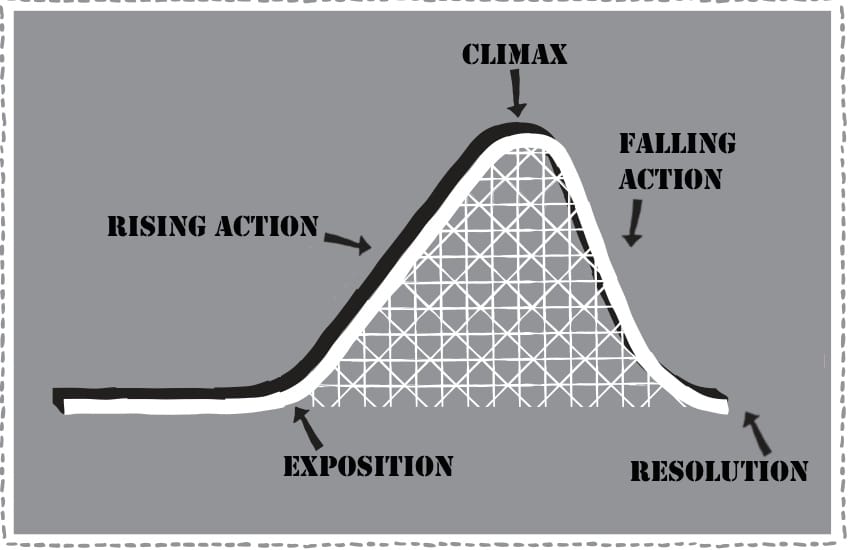
Now we as adults know that plots get more complex than this of course. Kurt Vonnegut's famous plot diagrams come to mind.
But I have this persistent image of writing a manuscript as being similar to building a roller coaster in roller coaster tycoon. If you’ve never had the pleasure, the original roller coaster tycoon (and its excellent sequels) was a management game where you ran a theme park. The thing that made it really fun, and somewhat astonishing to think of now, you could design your own coasters that would really run. Or, more likely, crash and burn in a fierey 8-bit explosion.

The thing is, building roller coasters was harder than it looked. You had to manage the speed of the coaster, not too fast, not too slow, the lifts and the valleys, and make it connect back to the beginning. And—crucially—not leave any gaps. Sound familiar?
The best way to test your coaster/story is by considering the experience from inside.
Yes its great to think about the plot as big picture from the outside, but you also need to take your experience for a test drive from the inside. What does the reader learn first, are you giving them information before they need it? Have you put a huge long (boring) lift chain at the start of your story? Are all the loops and fun bits at the beginning?
You need to pump some energy into your coaster/story to get it started.
What provides the lift to get things moving? Is it a slow lift to the top (with a great view of the inevitable ride that’s coming?) Or is it a jet launch straight into intense action? The type of lift you choose is crucial to the experience you are building.
You need to give people time to breathe.
People can withstand a lot if you give them a second to breathe between drops and loops. Too many twists in too short a time will make people dizzy, sick, or even pass out. Don Maass has a lot to say about breathing moments in the Emotional Craft of Fiction, but the gist is you have to let your characters, and readers, breathe every so often so they can incorporate what has happened and what is coming.
Don’t leave gaps in your experience
I know thats the whole gist of this article, but it can be surprisingly hard to spot these gaps from the outside. You know what happens between scene 45 and 46, but your readers only know the things that are on the page. Letting someone else read your manuscript before it's “ready” can help you spot places you might need to build more track. Just don't tell your friends you are using them as a crash test dummy.
Smooth transitions where you can
A jarring transition between sections is like bits of track that don’t flow together. Have you ever been on a really old wooden coaster? (looking at you Cyclone!) I came out with bruises because the transitions on the track are so jarring. Give yourself the space and time to build transitions between your scenes. That jarring effect of jumping between scenes can be useful, but you dull the impact if you use it too often.
That’s just a few thoughts about what is a pretty useful metaphor for me. I’m sure I could come up with more connections if I thought about it. But what is crucially useful to me is the mental model of moving through a story with an eye towards it being an experience that other people will have. You start to think about things like speed and twists and what perspective they have on what’s coming at what time.
So, what metaphors do you find useful when thinking about writing?
BTW - You can still play Roller Coaster Tycoon 2 through the open RTC2 project. Or if you want a modern experience that hits all the same notes, try Planet Coaster.
If you want to lose some time today, there are also dozens of really excellent Planet Coaster POV videos and RTC coasters synced to songs, like this dual coaster synced to Defying Gravity.
~~~
Photo Credit: Via Library of Congress. Detroit Publishing Co., Copyright Claimant, and Publisher Detroit Publishing Co. Looping the loop, Atlantic City. Atlantic City New Jersey United States, ca. 1901. Photograph. https://www.loc.gov/item/2016808794/.