Describe Your Taste
What makes a piece of writing good to you? Knowing what you like is an essential part of figuring out what you’ll enjoy writing.
What do you think of when you read the word aesthetic? TikTok influencers? Interior design? Is it a word you would apply to your writing? Every writer has an aesthetic, though you might not be aware of it. Are you spare and to the point? Flowery and light? Dense and gothic? The first step to defining your aesthetic is figuring out and describing in detail what you like.
What is Taste?
How do you know if a work of art, a piece of music, a novel, is good? What makes it good or bad? We can all probably put a finger on bad writing faster than we can on what specifically makes a piece of writing good, though we’d spend a lot of time describing it.
Aesthetics is a branch of philosophy dealing with questions of beauty. For the ancient Greeks, whether something was beautiful was also a question of truth, for what was beautiful must also be closer to the truth. One of the main questions of aesthetics is whether beauty is an objective quality (the same for everyone) or depends on the subjective experience of each person. This subjective sensitivity to aesthetic qualities is called your "taste" and it develops and changes over time based on your experiences.
I’d like you to skip the question of objective good today, and focus instead on the personal. What makes a piece of writing good to you, specifically. Why do you like what you like?
Knowing what you like is an essential part of figuring out what you’ll enjoy writing. You probably already have a good idea of the kinds of books you like. But what about your other interests? Your hobbies and interests and weird obsessions are also a place to mine for interesting tidbits. What makes those good to you? Describing these as specifically as you are able can help you write the best book for you.
Deliberate exploration of your delights.
The best way to begin to define your taste is to deliberately notice what you enjoy.
- Keep a notebook with you (physical or digital). In it make list of things that catch your interest. Shoes, architecture, bits of poetry. Make a moodboard, start a commonplace book, whatever you need to do to capture the things you like.
- Dream bigger. In the same journal start a few lists and keep adding to them over time. Be as specific as you can.
- hobbies you’d start if money and time were not a factor and what emotional benefit you think you’d get from doing them.
- places you dream of traveling and why you think you’d be happy there.
- times you’d visit with a time machine, specific places, days even.
- colors, patterns, or styles you’d wear if you didn’t need to care what others think about you.
- tastes and/or smells and the memories you associate with them
- Compare three books you adore, the kind that you would put in a top 10 list if I asked you to list one right now. They don’t have to be your favorite books ever, just ones you really, really enjoy today.
- First list the things you like about them individually, get as specific as possible for each one and drill down as far as you can.
- Take each item you wrote, and get more specific about it. Get beneath the surface thoughts to try to define what exactly makes that so good to you.
- Now compare those lists and write down the common threads between them. What things do they share that delight you?
- Does your current work incorporate any of these aspects? Can you figure out a way to incorporate all of them?
- Now do this for three books you enjoyed that are not in genres you usually read. Do these books share any similarities? Try the same exercise above and then compare to your first list.
- Now try three books you loathed, put down early, or barely recall. What made them so bad? Get specific. Open them up again if you can and try to figure out the moment you started to hate reading it. What’s happening? Are there any redeeming qualities? Remember this is about your experience, not anyone else's.
~~~
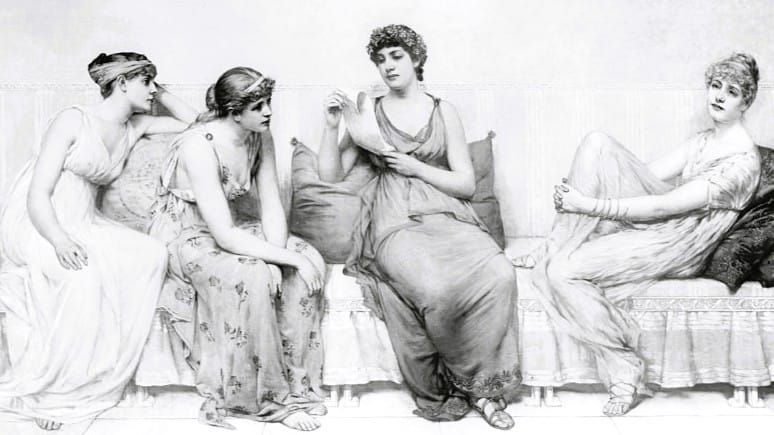
Image Credit: Via Lobrary of Congress: Millet, Francis Davis, Artist, and Publisher Detroit Publishing Co. Reading the story of Oenone. , None. [Between 1900 and 1912] Photograph. https://www.loc.gov/item/2016816644/.