Creativity is Connecting Things
Your ability to mash disparate experiences and knowledge together and make connections between them is what makes you uniquely creative.
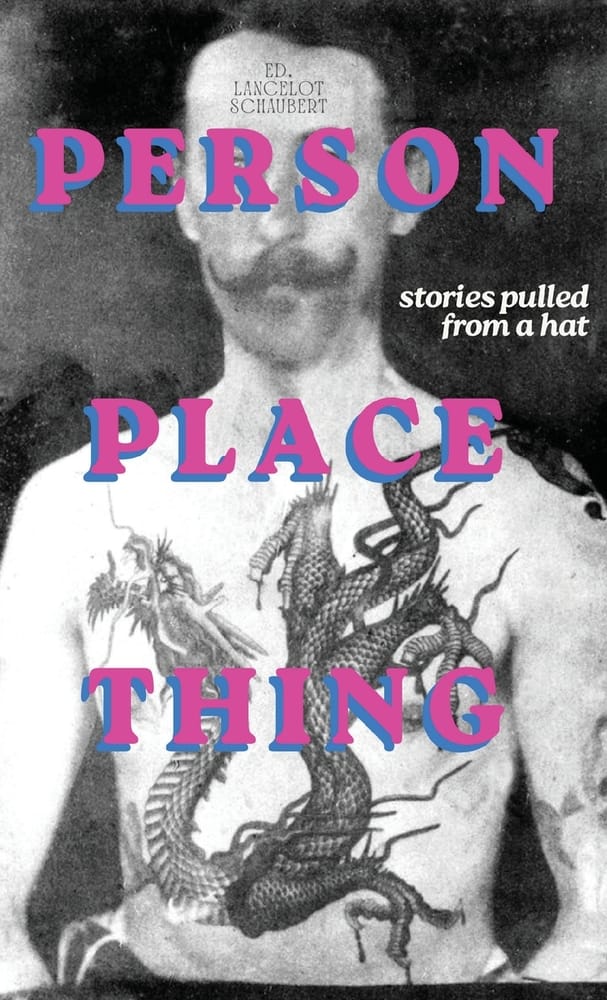
Hi friends, I have (another) story out this month, this time a reprint of my first published short story "Twelve Silver Candles" in an anthology called Person Place Thing. This anthology is pretty cool, because it is based on a writing prompt we do with my writers group. So many people had stories published from the prompt that we were able to put together an anthology. I also wrote a short introcution to the anthology with instructions on how to do the prompt for yourself or with your own writers group.
I opended my introduction to Person Place Thing with a Steve Jobs quote I both love and hate: “Creativity is just connecting things.” I think the thing I hate about this quote is the “just” in the middle. First, it is a weasel word. It robs this statement of its power. Creativity isn’t “just” connecting things. It *is* connecting things. And I think Jobs knew that, because the full quote is:
"Creativity is just connecting things. When you ask creative people how they did something, they feel a little guilty because they didn't really do it, they just saw something. It seemed obvious to them after a while. That's because they were able to connect experiences they've had and synthesize new things. And the reason they were able to do that was that they've had more experiences or they have thought more about their experiences than other people." Steve Jobs in an interview with Wired 1996 https://www.wired.com/1996/02/jobs-2/
Jobs is speaking to two things here. One, to the paradoxical nature of creativity in that when it really hits it doesn’t feel like you did much because you just saw the connections between disparate things. And two, that your ability to mash disparate experiences and knowledge together and make connections between them is what makes you uniquely creative.
I like to focus on the last part of the quote: “... the reason they were able to do that was because they’ve had more experiences or they have thought more about their experiences than other people.” I think that is the key, more experiences, and more thought. Two goals to give yourself to become more creative.
But I also think Jobs is wrong. There is a third thing: Creative people do more connecting. In fact, they practice connecting things, or rather they let their brains play by connecting things often and with more disparate things than most people do. And this creative play is something you can do deliberately.
In writing we have many ways to practice making connections to turn them into something new. Writing prompts are meant to do this, spark some new thought or insight. But most story prompts only give you one point of connection, or maybe two. It is much easier to create connections between two prompts, or even create a bank of “story seeds” as suggested in the StoryADay May process. Or, if you have a group of people, you can try this Person, Place, Thing activity which is my favorite way to generate groups of things to force your brain to build connections. This is also a great activity to do with a writer’s group. In fact my writer’s group has been doing this activity once a year since 2015. My original instructions for doing this activity with a writers group continue below.
If you'd like to read the introduction and get a free preview of Erin Cullen's short story "Beyond the Beyond" Lance is hosting that on his website here:
You’ll need: A group of people, lots of small slips of paper (at least 3 per person), three containers, a reasonable deadline.
Explain that you are preparing a short story writing prompt of random connections. The best prompts for this exercise will be specific, but not proper nouns, because you want to give the writer something to build off of. Proper nouns, however, can run you into trouble with publishing your story. So for a person “the last astronaut” is better than just “astronaut” because it gives more to work with, but “Neil Armstrong” is too specific. Another example, “your great-grandfather’s fountain pen” is much better than “a pen”, but “a Sailor 1911 fountain pen” is too specific.
Have everyone write their person on the first slip of paper, their place on the second slip of paper, and their thing on the third. Collect the slips in separate containers, mix up each of the containers, and then have each participant draw a set of one person, place, and thing for their prompt. If you’d like you can have everyone read their prompt aloud, which is usually amusing.
A note: do try not to mix the containers up. Although I once did get a story out of receiving “the Washington Monument” as my “thing” and “the Guggenheim museum” as my place, such mix-ups make the prompt very challenging.
The final step is for everyone to write a short story by the deadline. In my writer’s group we typically give a two month window to write a short story around 2,000 words, and then we reserve a session to read the stories aloud to each other. You may want to do the same, or have everyone write immediately after receiving the prompt. Alternatively, if you do not have a group, ask some friends to suggest people, places, and things for you and keep the containers around and pull a new prompt when you need one.
~~~
Photo Credit: Carson & Barnes wild animal circus. , None. [Between 1940 and 1950] [Photograph] Retrieved from the Library of Congress, https://www.loc.gov/item/2018652455/. Edited to black and white and cropped.