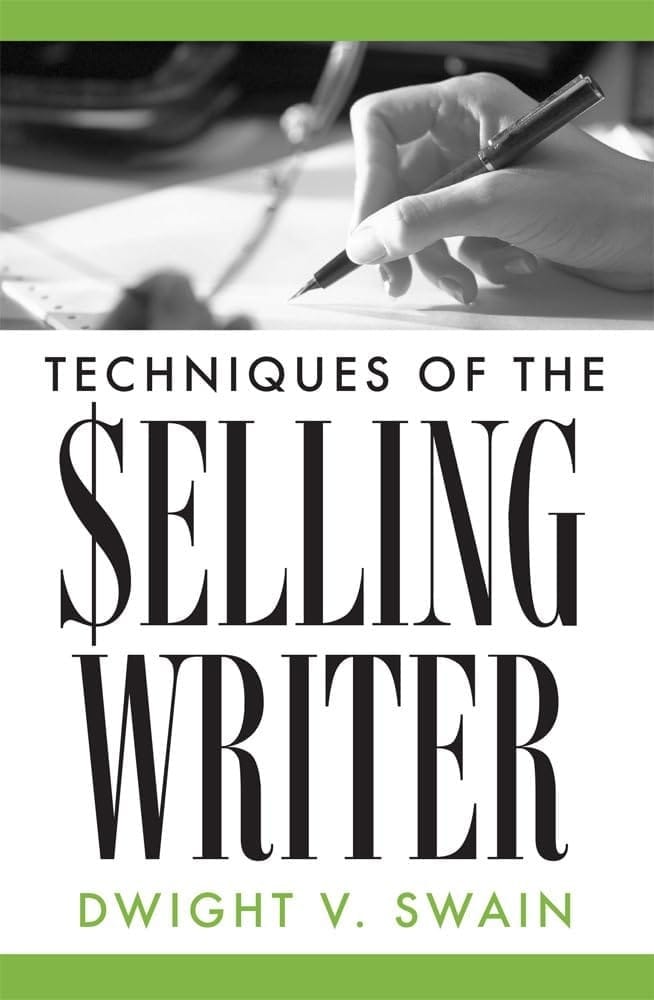
Techniques of the Selling Writer - Dwight V. Swain
A 50’s era pulp writer speed runs your writing knowledge. If I was teaching a college course today on writing fiction, this is the book we’d use as a textbook.
What: A 50’s era pulp writer speed runs your writing knowledge.
Tone: Your grandad wrote a writing book. It's pretty good, if dated in places.
Read it When: A book I wish I'd been handed as a new writer.
% On Topic: High
Keywords: Beginners, comprehensive, pov, plot, scenes, motivation
It sometimes astonishes me how timeless writing advice can be. When Dwight Swain was teaching writing workshops my granddad was in college. And yet so much of his advice rings just as true today. Swain was and is deeply a Pulp writer, beginning in 1941 he wrote science fiction, westerns, mystery, and action adventure stories for pulp magazines before transitioning to screenwriting and a teaching career at the University of Oklahoma. He was also a famous writing instructor in his day, teaching at hundreds of writers conferences and universities.
There’s a benefit to Swain’s experience that is evident in Selling Writer. He’s methodical. He writes in lists, laying out his points first and then working through them. If I was teaching a college course today on writing fiction, this is the book we’d use as a textbook. In fact, it is the only book we’ve done a group read of in my writers group, and that was mostly because Lancelot Schaubert and I kept referencing so often that it started to annoy people.
He opens with eight traps he finds beginning writers fall into, and very like a professor, he then answers each one, step by step. This is one of those books where it would be worth it to buy only the first chapter.
Swain's eight traps of the beginning writer are:
- They take an unrealistic view
- They hunt for magic secrets
- They try to learn the hard way
- They refuse to follow feeling
- They attempt to write by rules
- They don’t want to be wrong
- They bow down to the objective
- They fail to master technique
He moves to a brief but dense section on making words work for you. How to choose the right words. How to make your copy vivid. How to keep your meaning clear to the reader. If you’ve read a writing book before, none of this will be revolutionary, but it's presented so clearly and concisely that in 13 pages he’s covered what takes other writing books half the book.
Next he gets to the meat of the book, his chapter “Plain facts about feelings” is where we get into motivation reaction units, and how a character’s emotions about things (scenery, people, their own thoughts) can be used to drive the engine of your story. This section sells the book and is the one I am constantly referring back to, referring others to, and referencing in critiques at writers group. Motivation reaction units are the kind of thing that can rewrite the way you think about story.
Simply: story is change. Change follows patterns of stimulus and reaction, strictly chronological, and forcing the change outward on the world and inward on the characters, who then take actions that force other changes.
In terms of constructing a motivation-reaction unit, that order is this: A. Motivating stimulus B. Character reaction this order (1) Feeling (2) Action (3) Speech”
Not content to leave us with that, we get a chapter on “Fiction Strategy” which is also where he shows his pulp roots. Advice like:
"to bring a story into being, you need to think of it not as a thing, but as something you do to a specific reader—a motivation; a stimulus you thrust upon him.” p.117
And:
“In essence, the habitual reader is a tension addict. Tension is what he hopes to buy when he tossed down his quarter or half-dollar at the corner newsstand.” p.122
The chapters “Beginning, Middle, End” and “The People in Your Story” cover what they say on the tin. But again, these chapters are tight to bursting with excellent, actionable advice.
Lastly, “Preparation, planning, production” covers something seldom seen in writing books. What does the whole writing process look like, beginning to end? Also, what does it look like at different stages of your career? When you leave your office job to write. When you’ve gotten a bit of success (and yes, it includes advice to exercise). Some of the advice is dated, but is easily translated to modern if you think about it. Sure “Always keep your carbons” and “don’t use a spool until the ink runs dry” doesn’t apply today, but “Keep a backup of your work” and “submit a clean, legible copy of your work" is still the rule. “Always include a self addressed envelope” should be translated to “open your email in a timely manner”.
Overall, if you are looking for a starter book on writing you’ll get all the things you need from this book. It’s especially good for people looking to write punchy, fast, pulp-derived genres, but his advice is equally relevant to romance or slower stories if you put a little thought in about it.
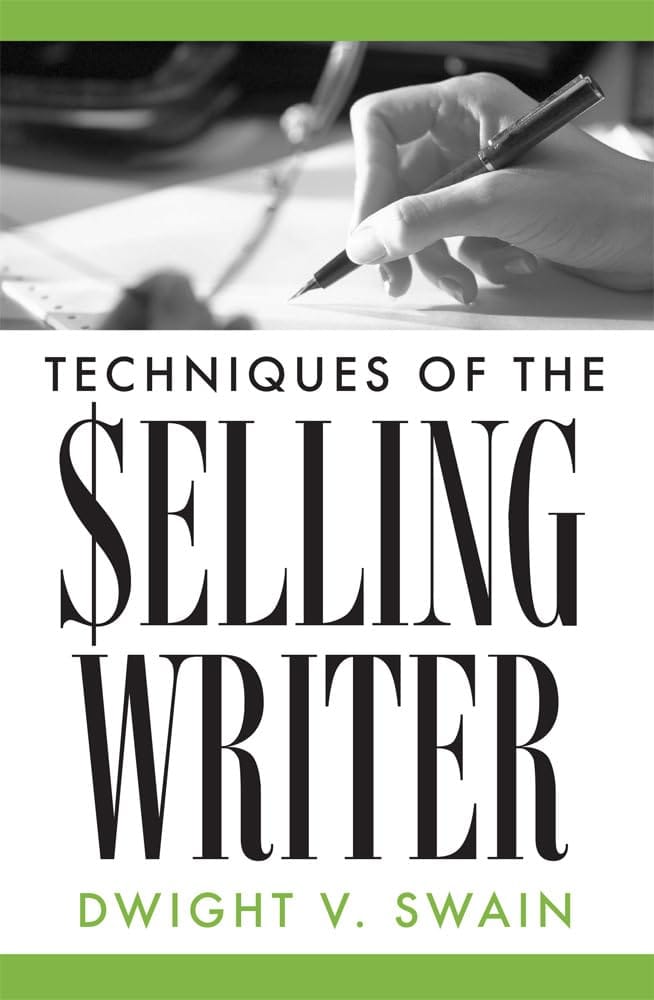
If you'd like to buy Techniques of the Selling Writer, please consider using this affiliate link to help support the site.