How to Session Zero Your Writer's Group
Start your new writers group with a "Session Zero" meeting to get everyone on the same page.
It's a new year and you’ve decided you want to start a writers group. Great. It’s one of the best things you can do for your writing and builds community. But how do you get it started? With a Session Zero meeting.
Session Zero is a concept from the Table Top Roleplaying space (think Dungeons & Dragons or Vampire the Masquerade). It is a meeting before the meetings to decide how the group will work, when you will meet, and what the community standards will be. It gives everyone a chance to chat together, get on the same page, and make explicit their expectations.
It is incredibly helpful to do this if you don’t know each other that well. And maybe even more important when you do all know each other because you might have assumptions that you didn’t even realize.
This is not an exhaustive list, but it is a good place to get started with your session zero. If I’ve left anything off, drop me a comment below or @ me on Bluesky and I’ll update the list with it.
Timing and Location
- When will sessions take place? I recommend a recurring time like “every second Saturday” that can live on your calendar and is easy to remember. That way even if someone misses an event, they already know when the next one is.
- Where will sessions take place? Public place or private space? What are the access needs of the group? If it is in a public place, do you need permission to meet there? Who is in charge of obtaining permission or making reservations?
- If the location rotates, decide on the rotation in advance and post it somewhere everyone can find it.
- When and how will you revisit what was discussed in this meeting? Set the time for your next business meeting now. Could be in the first meeting of the new year. Or every six months, or once a season. Doesn’t have to be a long meeting if everything is working but checking that that is still the case is helpful.
Membership
- How do new members get added? Is it free for anyone to come? Do you need an invite? How many invites do people get and when?
- How will your group communicate? Who is in charge of running that?
Readings
- Are you doing critique of written work? Working through a writing book? Just meeting up to write? Any combo or something else entirely? Make it clear to your group.
- If you are reading work, how long should the readings be? Who reads when? Is there a time limit?
- What types of work are allowed? Our group's rule is unpublished, new works only. Because getting critique of a published work is wasting everyone's time.
- What Genres are permissible? Is everyone specifically reading memoir? Short stories only? Novel sections only?
- Will you provide printed or digital copies of the work being read? How? How many should someone bring? Where does digital work get placed and how long should it remain up there?
- Do people need to have read the work in advance?
Critique
- Is there a critique methodology people prefer to use? (I like Mary Robinette Kowal’s ABCD Method and would strongly recommend people steer clear of Milford for these reasons).
- Do people need to write down their critique in advance? Is it due before, during, or after the meeting?
Safety Tools
- Discuss what safety tools your group should use. What topics are off limits? How can someone express their discomfort if they need to?
- What is the group's bathroom policy? OK anytime? Try to wait for a break?
- Can people leave early or arrive late if they need to? (I strongly suggest this be a general “yes” as it makes it easier for people to attend).
Leadership Roles
You, who are reading this post. You are going to get stuck with admin tasks. I can tell because you are still reading a post about setting up a writers group. This is a group effort, make it one. Spread that task around. Assign other people tasks or let them take some off your plate. And set as much as possible up in advance.
- Who is in charge of calling off a meeting if it needs to be called off?
- Who is in charge of reserving your space?
- Who is in charge of sending group reminders?
- Who can print documents?
- Who welcomes new members?
- Who brings the snacks/drinks?
Give Yourselves a Cool Name
Names bring people together and build a group identity. Plus someday you are going to need to thank all these people in the back of your novel someday and it is way easier to put “and all the fabulous members of the Starlings Writers Group who supported me through all these years” than trying (and maybe failing) to remember everyone’s names individually.
~~~
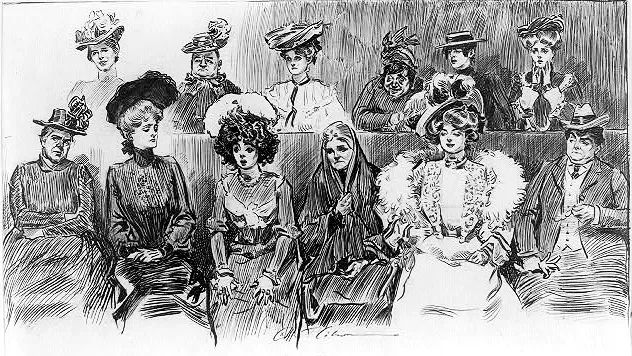
Image Credit: Gibson, Charles Dana, 1867-1944, artist. "Studies in expression. When women are jurors." via Library of Congress. https://www.loc.gov/pictures/item/2010716166/