Revisionaries - Kristopher Jansma
A smart book full of interesting literary tidbits about the failures of writers you have certainly heard of.
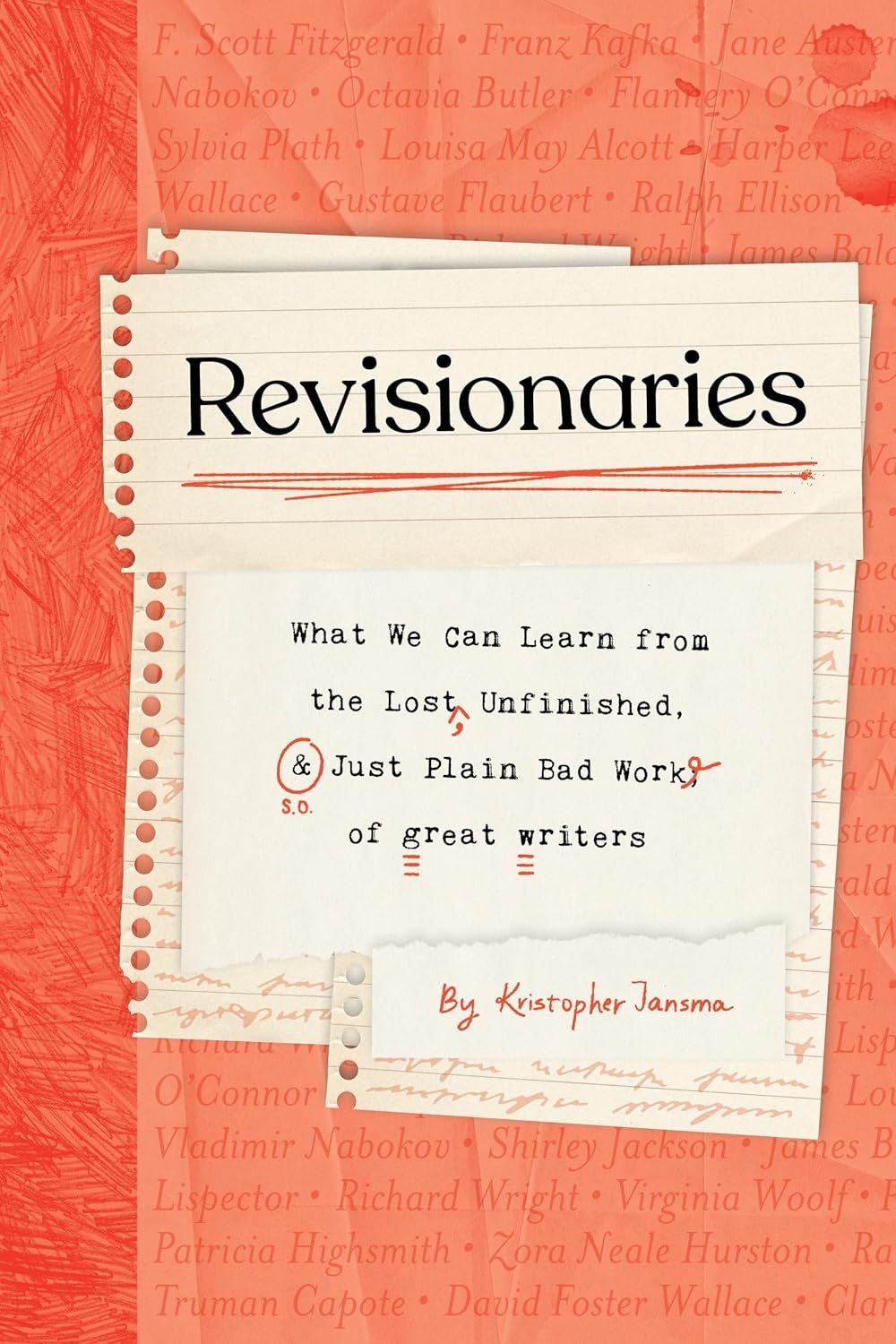
Tone: Inquisitive and scholarly, like taking a Lit topics class from a hip young adjunct professor.
What: An encouraging romp through the unfinished manuscripts of the 20th century's great authors.
Who by: Kristopher Jansma is an English professor and author who also writes the popular “unfinished business” column for Electric Lit.
Read it When: You are feeling disappointed about abandoning a work; you want a fun, reading related read; you need to remember that even famous authors are human
% on Topic: Medium
Every funny little project starts somewhere. Jansma begins Revisionaries by describing how he came to be interested in unfinished manuscripts in a college writing class. Assigned to read The Love of the Last Tycoon, F. Scott Fitgerald’s unfinished last novel, he found it “...a trainwreck. A total disaster. A hot, hot mess.” Years later he is the editor of the “Unfinished Business” column for Electric Literature, digging into university libraries and private archives for partial and abandoned manuscripts of the greatest writers of the 20th century. In his introduction Jansma writes:
Examining these works, each frozen in progress in some way, has revealed to me that our best writers all had their limits and flaws. Most didn’t have some inborn “perfect pitch” when it came to their craft—no innate sense of plot, or ear for dialogue, or eye for detail. Their rough drafts show they had to work at these things like anyone else. When they succeeded it was the result of lots of hidden labor, support from others, relentless revision, and often simply throwing whole books out. Very often, these immortal geniuses had struggled, despaired, and completely given up. They had to be both persistent and resilient in ways that I had never understood before. Pg. 13
Revisionaries at its core is an expansion of Jansma’s Unfinished business column. Readers of Electric Lit will recognize some sections: the unfinished works of Louisa May Alcott, Octavia Butler, Clarice Lispector, Truman Capote, among others. However the text of these articles have been expanded and revised to work in context with the overall work. Other sections are new for the book, covering Kafka, Austen, Gustave Flaubert, Harper Lee, and others. The unfinished works of twenty one authors are covered in total, an impressive work of scholarship.
Which is not to say this book is dry, it is written in what I’ll call a pop-literature style, more for entertainment than scholarship. Each chapter covers an individual writer with the story of their unfinished work and some general writing lesson that can be drawn from it. At times the looks into the lives of the various authors feel more like celebrity gossip, but that’s because many of the stories are filled with gossip-worthy drama, and it does make for an entertaining read. And while it does not dig deep into any one unfinished text, it does give an extensive citation list at the back so you can find those unfinished manuscripts for yourself. Ultimately I think this is the best way to introduce these, the story of why the manuscript is unfinished is likely more interesting than the texts themselves. And the motivated reader can continue their study with just a little effort.
Each chapter ends with a “Fail Like a Genius” section, which is where Jansma takes the story in the chapter and turns it into writing advice. Based on his years as a writing instructor, these are genuinely useful tidbits in the context of the stories of the unfinished manuscripts which precede them. While not a writing manual in the traditional sense, this does give you a way to implement some useful writing tactics and tools derived from the stories.
If I had one quibble with this book, it is that Jansma seems to be of two minds about the “genius” framing he has chosen. On the one hand he opens the book with:
An unfinished manuscript becomes a parting gift and a glimpse at what might have been. The discoveries I’ve made in reading them have shaped the way I write and the way I teach writing ever since. I’ve reconsidered my entire idea of literary merit—genius is not something bestowed upon a select few through gifts or talents, but something built up, over much time and effort, by those resilient enough to never stop testing new ways of creating. What I’ve found, time and time again, is that these works show that every genius is also merely human, and subject to the same stumbles, flaws, blocks, and total failures as any first-time writer. To read these incomplete novels and to understand the stories behind them is to expose creativity as something far more interesting and accessible, even if in doing so we must dismantle the very notion of genius. Pg 15
On the other hand he continually refers to each writer as a genius, and is clearly holding them up as brilliant writers. While I certainly don’t argue that the writers he has selected to highlight are geniuses, it does subtly undermine the idea of dismantling the “very notion of genius” to continue to lean on the term throughout the text. But this is a small annoyance in what is overall a very fun and entertaining book.
If you are looking for a smart book full of interesting literary tidbits about the failures of writers you have certainly heard of, this is a book for you. It’s also a great book if you are looking to feel closer to those same literary greats who also struggled with their rough drafts, had life get in the way of their writing, hated their own writing, and even wanted to burn it all down.
If you're thinking of checking out Revisionaries based on this review, please consider using this affiliate link to help support the site.